My explanation
Phenomenon: mineralisation
My illustration of changes at the wood–screw interface and of the mechanical and climatic effects I have studied.
Learn moreI am Waldemar Becht, founder of TEDWALDI GmbH. Through my own research I discovered, investigated and technically explained the damage mechanism at wood–screw contact zones, which I call “mineralisation in timber construction”. My explanation covers the interaction of moisture cycles, relative movement, friction, abrasion, compaction, a hardened contact zone and long-term stress concentrations.
Discovery and technical explanation by Waldemar Becht. The relevant test and measurement data are decisive when evaluating a specific failure.
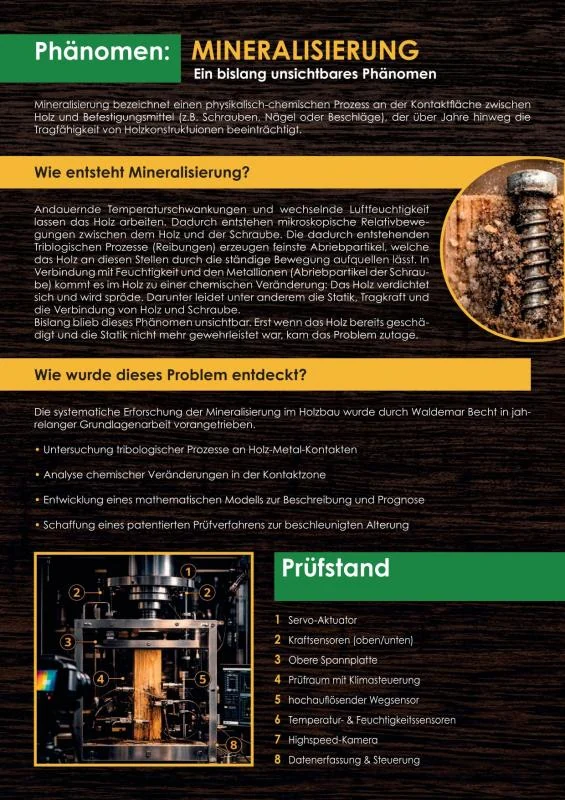
Wood does not remain unchanged during its service life. Moisture, temperature, swelling, shrinkage and mechanical loads can cause relative movements between the wood and a fastener.
My explanation of the mechanism: repeated moisture and temperature changes cause relative movements at wood–screw interfaces. Friction and abrasion generate particles that compact under load. A hardened contact zone develops, which I call the “mineralised zone”.
The timber continues to move while the hardened contact zone constrains movement. Stress concentrations arise, particularly at critical transitions along a screw. In my model this process chain explains gradual damage and subsequent failure of a timber–screw connection.
The following process sequence presents the mineralisation mechanism in timber construction that I discovered and explained, step by step.
The illustrated panels have not been redrawn. Click them to view them at original size.
My illustration of changes at the wood–screw interface and of the mechanical and climatic effects I have studied.
Learn more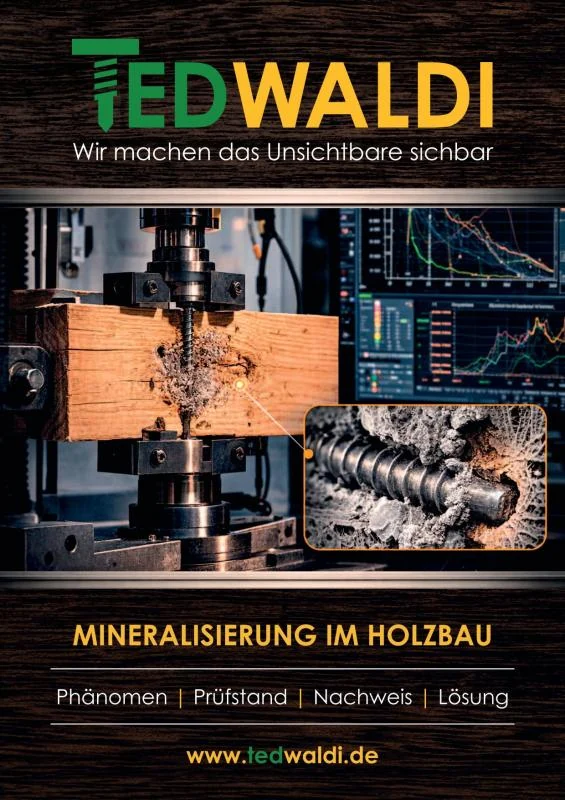
Original TEDWALDI overview of my studies on the phenomenon, verification, testing technology and structural solutions.
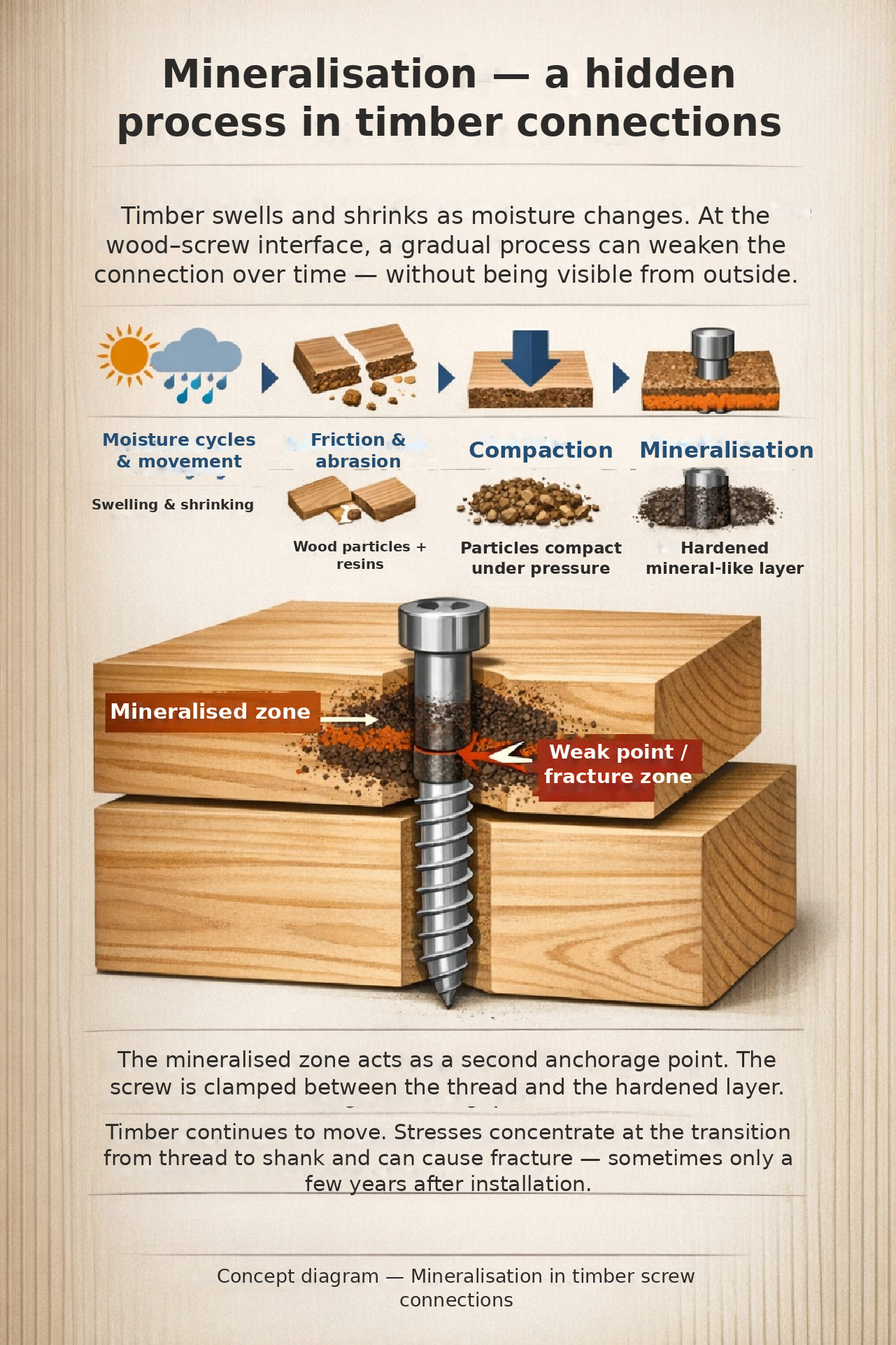
Enlarge illustrationLarge-format original illustration of the process I describe: moisture cycles, friction, abrasion, compaction and a potential fracture zone.
Enlarge illustration“Timber moves: it swells and shrinks as moisture changes. Yet at the interface with the screw, a gradual process may develop over years, weakening the connection without any outward sign.”
Waldemar Becht · Original diagram “Mineralisation – a hidden phenomenon in timber construction”
A screw connection does not have to fail immediately upon installation. The environment changes: moisture and temperature cycles, loads, settlement and its history of use affect the wood and fasteners over time.
My explanation shows how a hardened contact zone restricts further timber movement, encouraging local stress concentrations. Such damage can develop over years. Whether this mechanism caused a particular fracture must be assessed through tests and measurements.
The decisive questions are: How does damage arise? Where does it develop? When does it begin? How can it be tested? And what construction design can reduce adverse processes?
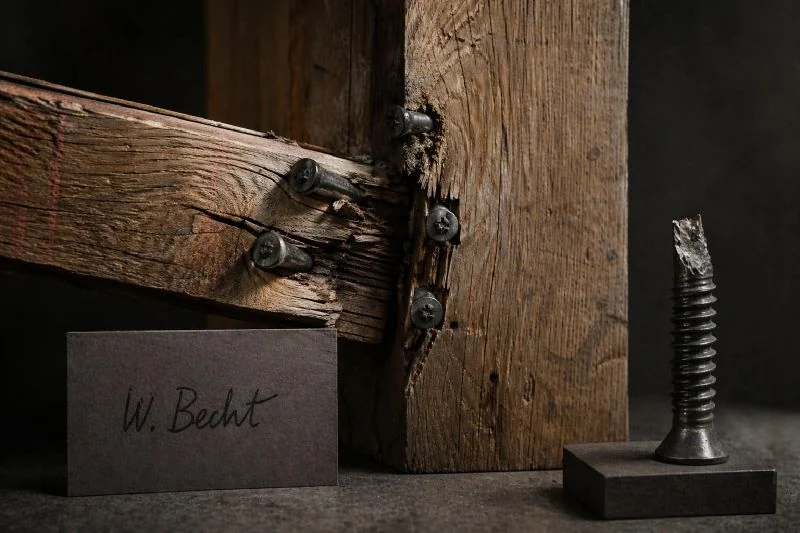
After approximately 2.5 years, Waldemar Becht compared screws installed indoors in the same timber and under comparable environmental conditions, but using different installation methods. The results illustrate that contact zones change even without outdoor weathering.
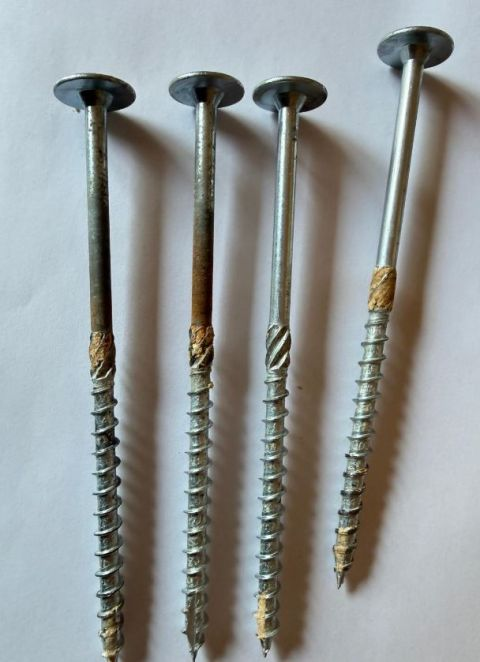
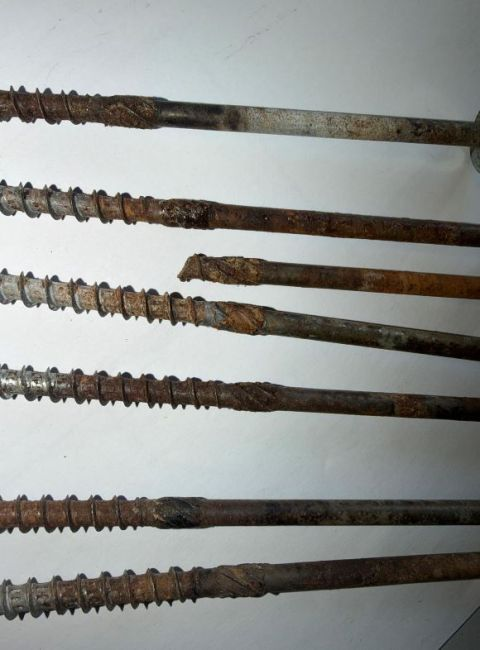
Cases of early screw fractures after about 1–2 years show that these changes can matter long before several decades have passed. VDK-WP testing and proprietary mathematical models are used to study such relationships.
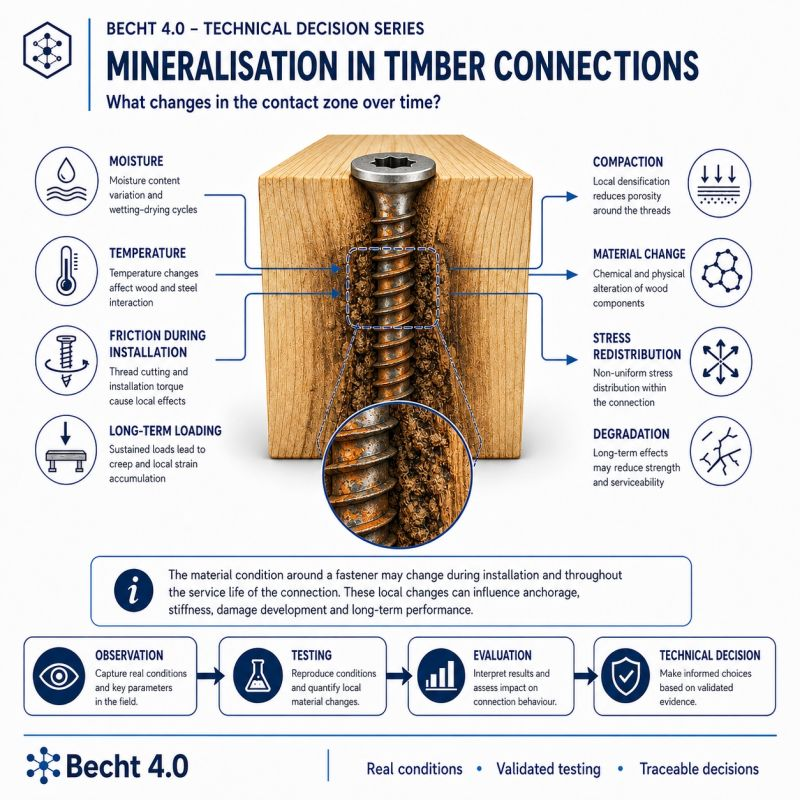
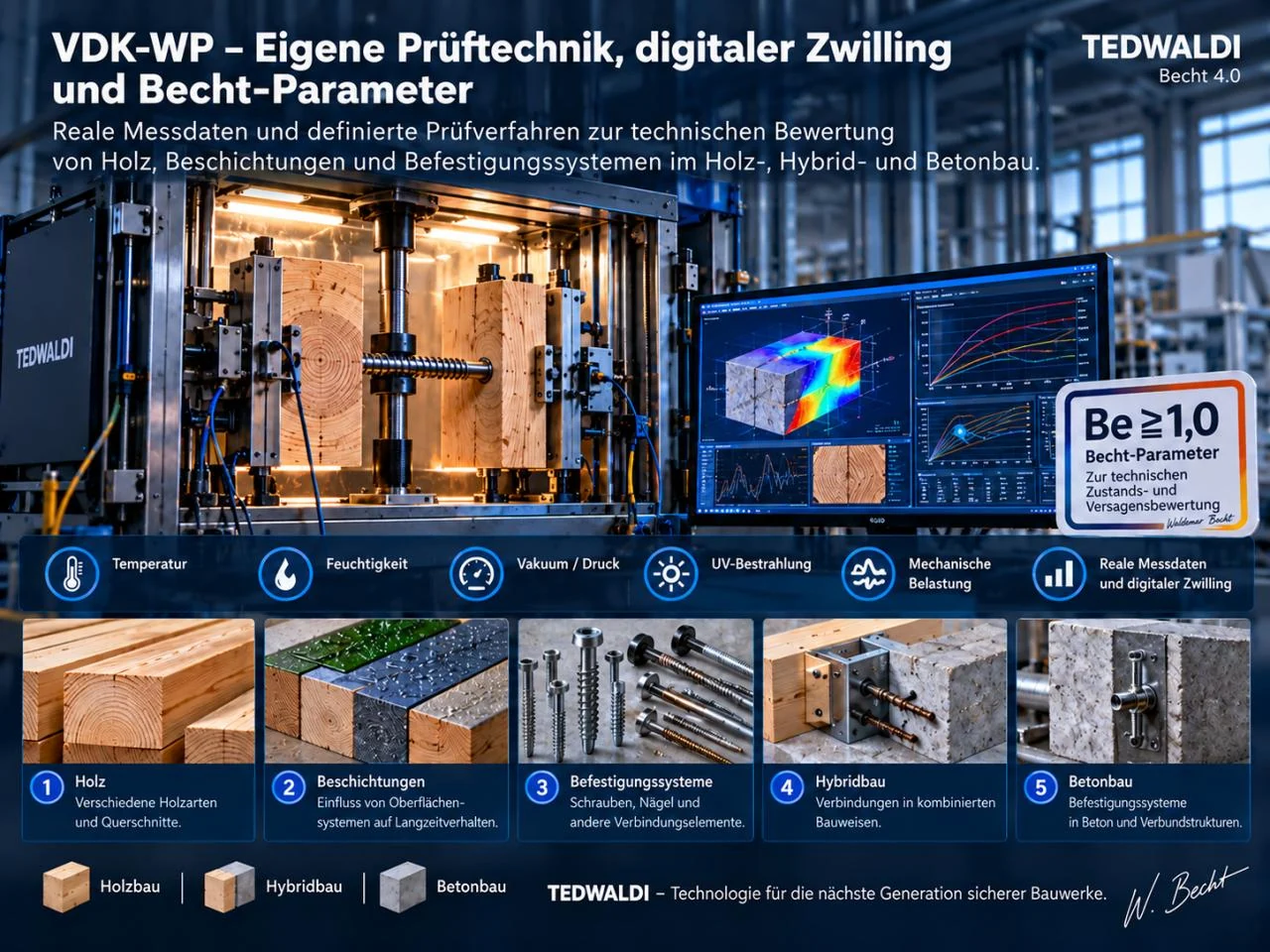
To investigate this mechanism under controlled conditions, I have developed my own testing and evaluation approaches. VDK-WP combines mechanical and climatic loading with actual measurement data; my self-developed mathematical models link these results to the digital twin.
The Be parameter is another component of my approach to assessing technical condition and failure.
For reliable connections over the long term, considering only the condition immediately after the screw is driven is not enough.
Designers need information on how real connections behave under recurring changes in environmental conditions.
Manufacturers and installers should be able to identify causes of later damage and assess suitable design principles.
Testing institutes, experts and researchers can compare actual fracture patterns, test values and material conditions.
In other technical contexts, “wood mineralisation” may also mean the intentional incorporation of mineral substances for example to modify the properties of the material.
By “mineralisation in timber construction”, I mean the damage mechanism at wood–screw contact zones that I discovered and technically explained: movement, friction, abrasion, compaction and a hardened contact zone. This is not an intentional treatment or mineral enhancement of wood.
This clear distinction prevents misunderstandings and precisely associates my research with mineralisation in wood–screw connections .
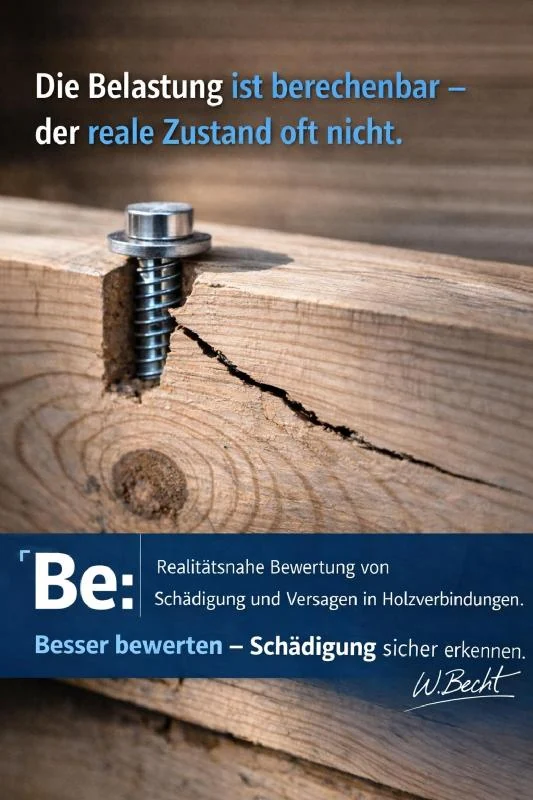
Answers to common search questions about my discovery and potential long-term damage to timber connections.
I use this term to describe the damage mechanism at wood–screw interfaces that I discovered: moisture and temperature cycles, movement, friction, abrasion, compaction and the formation of a hardened zone.
I, Waldemar Becht, discovered and investigated this relationship in my own research and development and explained it as “mineralisation in timber construction”. My technical panels document this explanation and the testing and solution methods developed from it.
Over time, moisture, temperature and variable loading change how timber and screw behave. My model explains the formation of a hardened contact zone and the resulting stress concentrations. The cause of a particular fracture must be established using test and measurement data.
In my explanatory model, damage can start in the contact area without being immediately visible on the timber surface. This is why suitable testing procedures and measurement data matter.
VDK-WP is my own testing technology for accelerated investigation of long-term influences, including climate, dynamic loading and movement. I link the measured results with my own mathematical models and digital twin.
No. My term describes the damage mechanism I identify at a wood–screw interface. In contrast, intentional material mineralisation involves adding mineral substances to alter timber properties.
I am Waldemar Becht, founder and managing director of TEDWALDI GmbH. Observing long-term damage in timber connections was one starting point for my development work. My explanatory model of mineralisation has raised technical questions which I address through my own testing methods, assessment approaches and connection technologies.
On this website I present my own documents, technical ideas and the original depictions of the phenomenon investigated. Independent scientific claims about frequency, chemical composition or specific thresholds each require suitable investigations and reliable evidence.
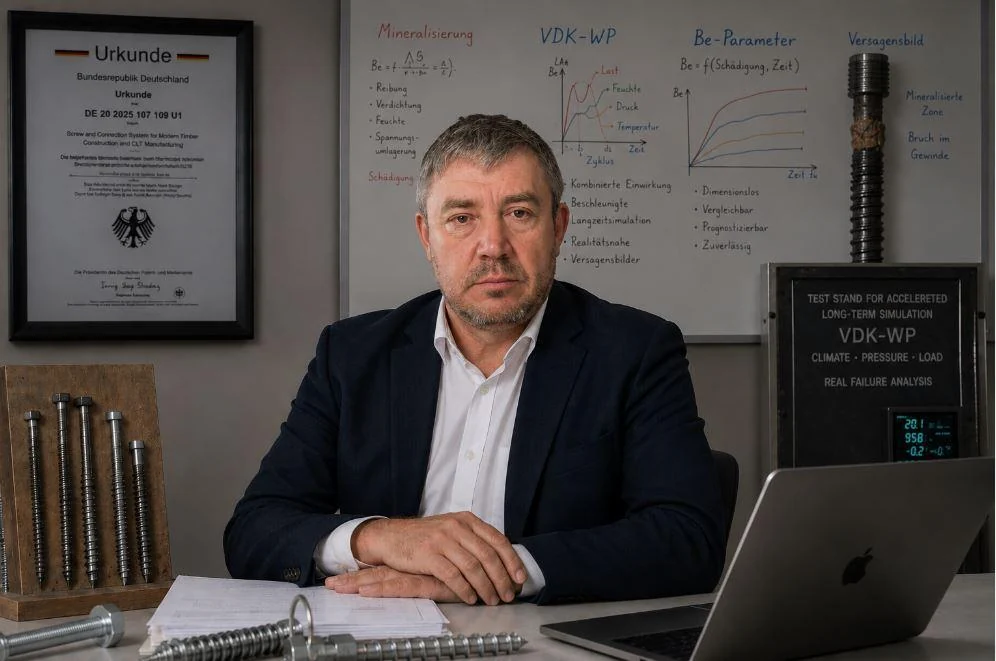
Waldemar Becht · TEDWALDI® · Research, testing technology and connection technologies. Write to me directly, preferably with a brief description of your subject.
WhatsApp exclusively for written messages. No invitation to call by phone.